
Care Home Projects
- Details
- Written by: J C Burke
- Hits: 8
 Below is an investor pitch for purpose-built care and nursing homes in the UK, reimagined as self-sustaining micro-cities, incorporating Combined Heat, Power, and Cooling (CHP+C), active landscaping, and earthworks. The financial projections and market data have been revised to reflect the latest available information as of 4th November 2025, using insights from recent sources and adjusting for inflation, market trends, and economic conditions. The structure remains investor-focused, emphasizing sustainability, profitability, and alignment with the UK’s elderly care needs
Care Home Investment Opportunity
Executive Summary
Purpose-Built Care and Nursing Homes as Self-Sustaining ‘Micro-Cities’ in the UK
Investment Opportunity
- Market Context: UK care home market valued at £26.2bn (December 2024), with 50% of homes in unsuitable converted properties struggling with rising costs
- Core Strategy: Acquire older care homes at £2.5m each, redevelop into 75-bed luxury facilities for £6-7m, achieving valuations of £8-15m
- Timeline: 3-year project with potential £150m exit or long-term lease revenue strategy
- Market Growth: 2024-2025 marked as "year of growth" with improved occupancy levels and increased transactional activity
Current Market Performance (2025)
- Occupancy Rates: 89.6% occupancy in Q1 2025, stable from 2024 levels
- Average Weekly Fees: £1,260 AWF in Q1 2025, representing 7.9% year-over-year increase
- Market Size: £9.3bn market size in 2025 for residential nursing care
- Demographic Demand: Need for 440,000 additional care home beds by 2032 to reduce over-80s to care home bed ratio from 7.45:1 to 5:1
Financial Projections
Acquisition Plan: 16 properties over 24 months with revolving bank financing
Revenue Options:
- Sales: £300,000-£360,000 per bed depending on quality and location (2024 completed transactions)
- Premium Valuations: £100,000-£200,000 per bed for high-spec facilities (£7.5m-£15m per 75-bed home)
- Leasing: £540,000-£720,000 annual rent per property (5-7% yield)
- EBITDA Multiples: Currently 4-10x for freehold properties, reduced by at least 2x for leased
- Construction Costs: £7-12m for 60-80 bed facility in 2025, with costs £2,000-£3,500+ per square metre
Energy Cost Challenge & Solution
Energy Outlook - Whats Missing
- Details
- Written by: Interogation of AI by John Burke - Research and Analysis - AI
- Hits: 26
 IEA World Energy Outlook 2025: Gap Analysis
What's Missing from the "World View" Through the Lens of Waste Reduction & McGuire's Systems Framework
Prepared: December 2025
Analysis Context: Based on previous discussions regarding energy efficiency, waste reduction strategies, and Peter McGuire's GAP identification philosophy
Executive Summary
The IEA's World Energy Outlook 2025, while comprehensive in its modelling of energy supply scenarios and technology deployment pathways, exhibits fundamental structural blind spots that would be immediately visible through Peter McGuire's gap identification framework. The document exemplifies what McGuire warned about: when your analytical structure is built around the wrong organizing principles, you create systematic blind spots that prevent you from seeing the most important opportunities.
Core Problem: The IEA framework is structured around:
- Supply-side solutions (generation capacity additions)
- Fuel substitution (renewable energy replacing fossil fuels)
- Carbon emissions accounting (CO2 as primary metric)
This structure systematically obscures:
- Demand-side waste reduction (capturing the 60%+ energy currently lost)
- Thermodynamic efficiency fundamentals (Tier 1 physical realities)
- Integrated systems thinking (CHP, district heating, industrial symbiosis)
Part 1: Peter McGuire's GAP Framework Applied to IEA
1.1 What is Gap Analysis?
Peter McGuire's pioneering work in the 1980s-1990s demonstrated that the structure of your analytical framework determines what you can see. His visual, multi-dimensional knowledge systems could identify "gaps" - missing connections, knowledge domains, or approaches that conventional linear frameworks systematically miss.
McGuire's Core Insight:
"Flawed analytical structures don't just produce incomplete answers - they prevent certain questions from being asked at all."
1.2 The IEA's Structural Framework
The IEA World Energy Outlook 2025 organizes its analysis around:
Primary Organizing Dimensions:
- Scenarios (Current Policies, Stated Policies, Net Zero Emissions)
- Fuel Types (Oil, Gas, Coal, Renewables, Nuclear)
- End-Use Sectors (Transport, Buildings, Industry)
- Geographic Regions (with emphasis on emerging markets)
- Technology Deployment (Solar, Wind, EVs, Heat Pumps, Hydrogen)
Primary Metrics:
- Carbon emissions (CO2 tons)
- Installed capacity (GW)
- Energy consumption by fuel type (EJ)
- Investment requirements ($)
- Temperature outcomes (°C above pre-industrial)
1.3 What This Structure Makes Invisible
This framework creates systematic blind spots for:
The Conservation of Energy
- Details
- Written by: J C Burke
- Hits: 66
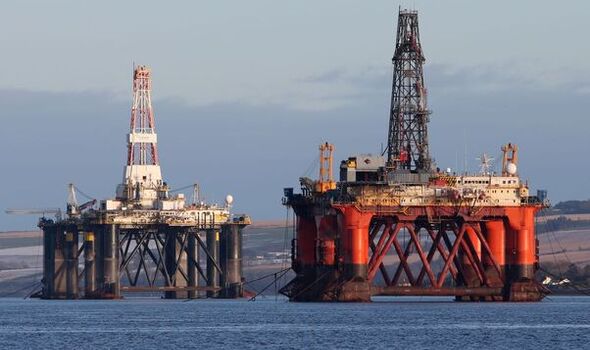 Based on the NESO report released yesterday (26th November 2025 - hidden behind the Budget fiasco??) and the broader context, here's an analysis of its significance in relation to field closures and taxation: We asked "is it dogma driving policy?"
Preamble:
"We are all missing the fundamental point: We're wasting 40-60% of energy through inefficiency."
Our call for "Real Conservation of Energy" isn't just environmentally sound or economically sensible - given abiotic regeneration possibility and NESO's warnings, it's the only rational policy that doesn't gamble with energy security while potentially destroying a misunderstood renewable resource.
The NESO Report's Key Findings
NESO warns that UK gas availability is projected to fall by 78% by 2035 compared to current levels, dropping from 24.5 billion cubic metres this year to just 5.4 billion cubic metres by 2035. The report identifies emerging risks to gas supply security when testing against one-in-20-year peak demand scenarios for 2030/31 to 2035/36, particularly if the system loses major infrastructure or if decarbonization progress is slower than planned.
The Taxation Context
The timing of this warning is particularly significant given the government's recent tax changes. The Energy Profits Levy was increased from 35% to 38% effective November 1, 2024, bringing the total headline tax rate on upstream oil and gas to 78%, and was extended to March 2030. Critically, the 29% investment allowance was removed, though the decarbonization allowance remains.
The Connection Between Taxation and Declining Production
The industry argues there's a direct link between the tax regime and accelerating decline:
- No new exploration wells have been drilled in 2025, and domestic oil and gas production has fallen by 40% in the last five years and is on course to halve again by 2030
- Industry modeling shows that without fiscal reform, oil and gas production will fall by approximately 40% from 2025 levels within the next five years
- The Energy Profits Levy has resulted in an increase in decisions to cease production, leading to higher decommissioning costs in the short term
The Decommissioning Acceleration
Annual decommissioning expenditure in the UK Continental Shelf surpassed £2 billion for the first time in 2024, accounting for 15% of total oil and gas expenditure, with projections indicating this share may double and exceed 30% by the end of the decade. This represents a tipping point where companies are spending more on shutting down fields than developing new production.
Bio-Methane from Sewage Sludge
- Details
- Written by: J C Burke
- Hits: 65
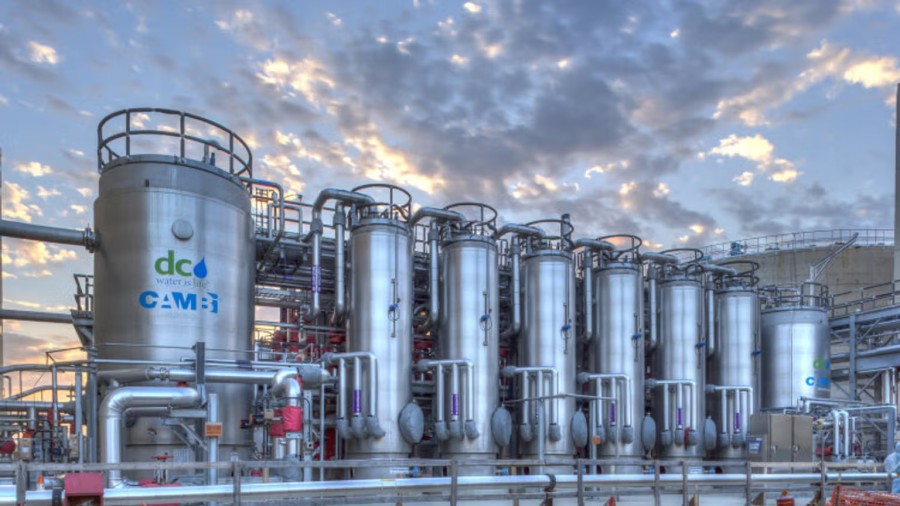 Our Primary Focus is on the extraction of Bio-Methane, typically using Thermo-Hydrolysis for maximum yields. However, Sewage sludge in today's modern cities, contains a great many other pollutants - the bio-gases themselves are a combination of methane (CH4), Carbon Dioxide (CO2), Hydrogen Sulphide (H2S), Ammonia and other gases. But the Sewage Sludge aslo contains the "forever chemicals" now prevalent within the modern 'societies' flouro-carbons - which are very difficult to treat - but not impossible. The scourge of PFAS pollutants;
It was the raising of this issue with an invitation to speak at PFAS Treatment Summit 2026 in Orange County, California that prompted us to rethink this issue and to research alternatives to the 'usual' incineration methods. Indeed new research suggests - See below;
Thermal hydrolysis has limited effectiveness against PFAS in sewage sludge, and may actually worsen certain aspects of the problem. This was our standard approach;
What Happens During Thermal Hydrolysis
Thermal hydrolysis typically operates at 150-180°C and 6-8 bar pressure for 20-30 minutes. These conditions are far below what's needed to break PFAS's extremely strong carbon-fluorine bonds, which require temperatures exceeding 1000°C for complete destruction.
Effects on PFAS
Minimal destruction: The process doesn't destroy PFAS molecules. The C-F bond energy (~485 kJ/mol) is among the strongest in organic chemistry, making these compounds remarkably stable at thermal hydrolysis temperatures.
Potential transformation: Some longer-chain PFAS precursors may partially degrade into shorter-chain PFAS compounds, but this doesn't eliminate the contamination—it just changes its form.
Page 1 of 12