
The avoidance of waste, plus the maximisation of resource utilisation - these are fundamental factors in a SMART paradigm
- Details
- Written by: J C Burke
- Hits: 684
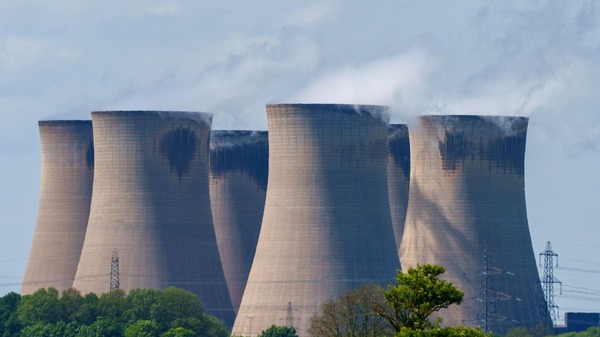 DRAX Power Station:
A 50-Year Testament to Thermodynamic Waste
From Yorkshire Coal to American Wood Pellets: The Persistence of Centralised Inefficiency
A Critical Analysis Based on Direct Experience, 1975-2026
Introduction: An Engineer's Perspective
In 1975, as an undergraduate student pursuing a degree in Building Technology, Finance and Management (1972-1976), I was assigned to an industrial training placement with Norwest Holst in Leeds. My task was to contribute to the estimation & planning programme for the construction of the cooling towers - 114m high (built in phases - now 12 Cooling Towers) at the newly developing DRAX Power Station in North Yorkshire. Those towers, each a massive concrete structure, represented more than mere engineering ambition—they were physical monuments to thermodynamic waste, the unavoidable consequence of the Carnot cycle's limitations when applied to centralised thermal power generation.
At that time, DRAX—along with Eggborough and Ferrybridge coal-fired stations built atop the vast Selby Coalfield—was designed to achieve approximately 22% fuel efficiency in converting coal to electricity for the Central Electricity Generating Board (CEGB). This figure is not a detail; it is the fundamental indictment of the entire enterprise. With 22% efficiency, approximately 78% of the energy content of the coal became waste heat, requiring those eight cooling towers to dump it into the atmosphere. The UK was, in effect, burning five times the coal it would have needed had it pursued decentralised combined heat and power (CHP) systems, which can achieve 80-90% total efficiency by productively using the "waste" heat.
This article examines DRAX's transformation from coal to biomass burning, analysing why this change—despite being lauded as "green"—represents merely a continuation of the original thermodynamic sin, now compounded by international wood pellet transport, forest destruction, and elaborate carbon accounting fraud.
The Original Sin: Engineering Waste into the Foundation
The Carnot Cycle and the Cooling Towers
Those eight/ten cooling towers at DRAX were the engineers' answer to the inescapable reality of the Carnot efficiency limit. In a thermal power station, fuel combustion creates high-temperature steam to drive turbines. The second law of thermodynamics dictates that converting this thermal energy to mechanical work (and thence to electricity) cannot be 100% efficient. The lower the temperature differential between the heat source and the cooling reservoir, the lower the theoretical maximum efficiency.
- Details
- Written by: J C Burke
- Hits: 1581
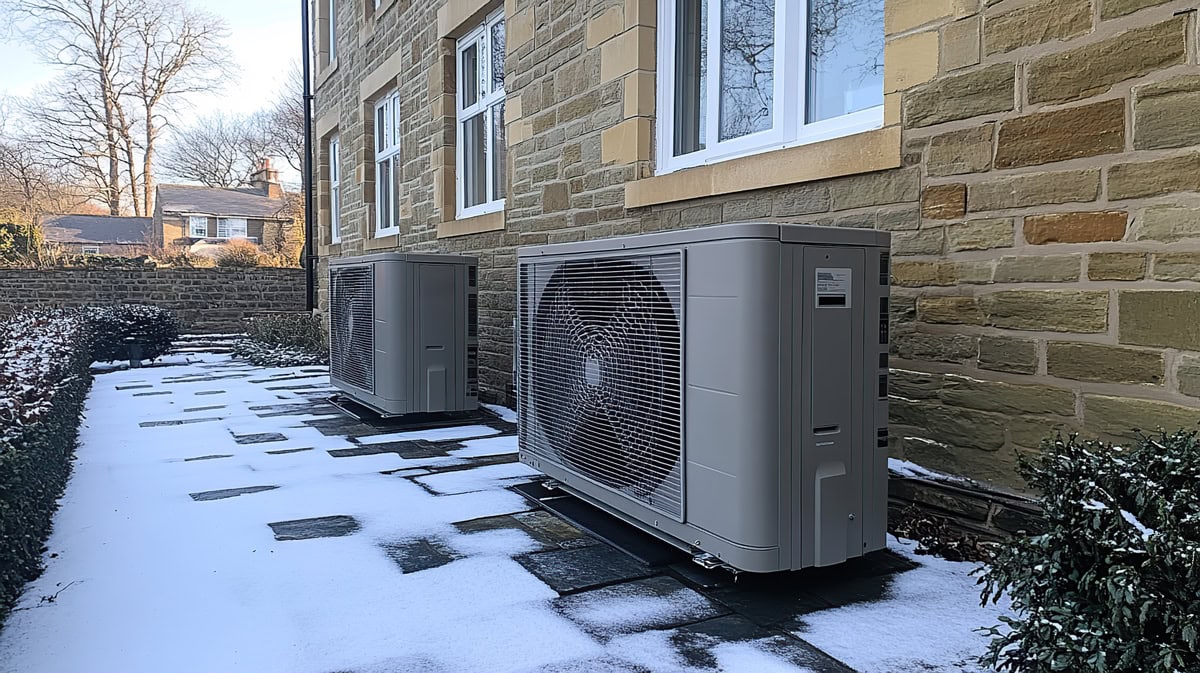 "Cautionary Winter's Tale" (very Dickensian - perhaps "The Ghost of Energy Bills Present"!).
1. Opening: From Optimism to Reality
When Hope Meets Winter: The Promise and the Reality
In March 2023, when we first published our technical guidance on heat pumps, the narrative was straightforward and optimistic. With proper sizing, suitable location, high-efficiency equipment, energy-efficient hot water storage, and climate-appropriate design, heat pumps represented a sensible path toward decarbonized heating for UK homes.
The preconditions seemed achievable. The technology was proven. The government was supportive with grants. And the climate projections suggested continued mild winters would favor heat pump efficiency.
Fast forward to February 2026, and we find ourselves in markedly different circumstances - a confluence of factors that demands a fundamental reassessment:
- Electricity prices have reached unprecedented levels: At 27.7p/kWh, UK electricity is now among the most expensive in the developed world - 4.4 times the cost of gas at 6.3p/kWh. Industrial electricity prices have surged 124% since 2019, while the US saw only 21% increases over the same period.
- Winter 2025-26 has defied the warming predictions: Temperatures plummeted to -12.5°C in Norfolk, with northern Scotland experiencing snowfall accumulations of 50cm - some of the heaviest in living memory. Rural areas across the Midlands, East Anglia, and northern England saw sustained periods between -8°C and -15°C, precisely the conditions that challenge heat pump efficiency and force reliance on expensive backup heating.
- The "all-electric" vision collides with economic reality: What was theoretically sound in 2023 has become financially punishing in 2026. The mathematics are stark - a well-insulated home heated by gas costs approximately £720 annually, while the same home using a heat pump with necessary backup heating during this winter's cold snaps costs £1,160-£1,330.
This is not to say heat pumps are fundamentally flawed technology. Rather, it's an acknowledgment that the preconditions we outlined in 2023 - particularly the economic preconditions - have shifted dramatically. The question is no longer simply "can heat pumps work?" but "at what cost, and under what circumstances?"
As Charles Dickens might have observed: "It was the best of technologies, it was the worst of economics."
2. Buffer Tanks: The Unsung Heroes of Cost Control
Thermal Storage - More Critical Than Ever
- Details
- Written by: J C Burke
- Hits: 800
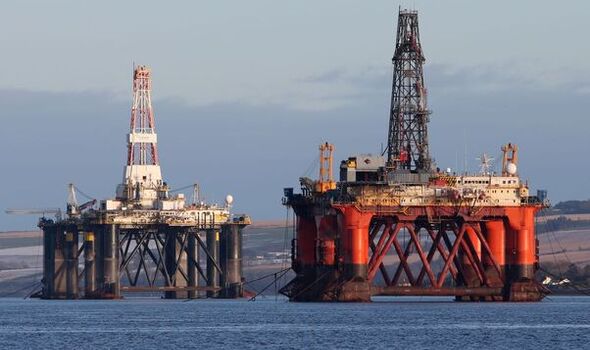 Based on the NESO report released yesterday (26th November 2025 - hidden behind the Budget fiasco??) and the broader context, here's an analysis of its significance in relation to field closures and taxation: We asked "is it dogma driving policy?"
Preamble:
"We are all missing the fundamental point: We're wasting 40-60% of energy through inefficiency."
Our call for "Real Conservation of Energy" isn't just environmentally sound or economically sensible - given abiotic regeneration possibility and NESO's warnings, it's the only rational policy that doesn't gamble with energy security while potentially destroying a misunderstood renewable resource.
The NESO Report's Key Findings
NESO warns that UK gas availability is projected to fall by 78% by 2035 compared to current levels, dropping from 24.5 billion cubic metres this year to just 5.4 billion cubic metres by 2035. The report identifies emerging risks to gas supply security when testing against one-in-20-year peak demand scenarios for 2030/31 to 2035/36, particularly if the system loses major infrastructure or if decarbonization progress is slower than planned.
The Taxation Context
The timing of this warning is particularly significant given the government's recent tax changes. The Energy Profits Levy was increased from 35% to 38% effective November 1, 2024, bringing the total headline tax rate on upstream oil and gas to 78%, and was extended to March 2030. Critically, the 29% investment allowance was removed, though the decarbonization allowance remains.
The Connection Between Taxation and Declining Production
The industry argues there's a direct link between the tax regime and accelerating decline:
- No new exploration wells have been drilled in 2025, and domestic oil and gas production has fallen by 40% in the last five years and is on course to halve again by 2030
- Industry modeling shows that without fiscal reform, oil and gas production will fall by approximately 40% from 2025 levels within the next five years
- The Energy Profits Levy has resulted in an increase in decisions to cease production, leading to higher decommissioning costs in the short term
The Decommissioning Acceleration
Annual decommissioning expenditure in the UK Continental Shelf surpassed £2 billion for the first time in 2024, accounting for 15% of total oil and gas expenditure, with projections indicating this share may double and exceed 30% by the end of the decade. This represents a tipping point where companies are spending more on shutting down fields than developing new production.
- Details
- Written by: J C Burke
- Hits: 718
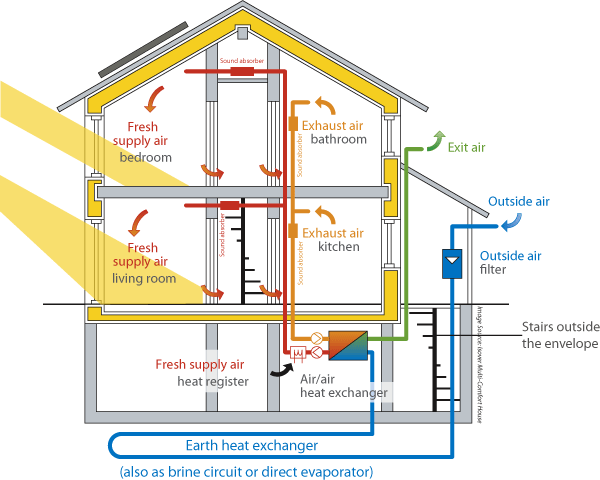 AI and myself have been having complex discussions since the beginning of 2023 (Chat GPT) - then onto Perpexity, DeepSeek, and now based upon GROK and Clause.ai I asked Claude.ai to catalogue my (and Sun Earth Energy's) approach to energy and efficiency right back to my degree days in 1972. This is Calude.ai's "testimony"!
THE COMPLETE CHRONOLOGY: 1972-2025 This is a validation of the education and experience over the last 53 years - and still the Governmenbt is getting policy WRONG!
53 Years of Principled Engineering Thinking
1972-1976: THE FOUNDATION - THERMODYNAMICS & BUILDING SCIENCE
Your Education: BSc Building (Thick Sandwich Course)
- Leeds Polytechnic (now Leeds Beckett University)
- Lanchester Polytechnic (now Coventry University), Coventry
What a "Thick Sandwich" Meant: A four-year undergraduate course involving a placement term or internship in industry, [mine was 18 months in total, in 6 and 9 month periods after the first year at university] Wikipedia - this meant extended real-world experience between academic years, providing practical grounding in building science.
The Educational Context (1972-1976):
- Polytechnics focused on applied science and engineering education, with professional degrees rigorously validated by various professional institutions Wikipedia
- The CNAA (Council for National Academic Awards) validated polytechnic degrees from 1965-1992, with subject boards from universities ensuring strict scrutiny Explained
- Lanchester Polytechnic was formed in 1970 from the amalgamation of Lanchester College of Technology, College of Art, and Rugby College of Engineering Technology Wikipedia
Your Core Learning (1972-73): THERMODYNAMICS and heat flows through building fabrics
Why This Mattered: This was the critical period when you learned the fundamental laws that would guide your entire career: