
AI-powered research and technical documentation
- Details
- Written by: J C Burke
- Hits: 789
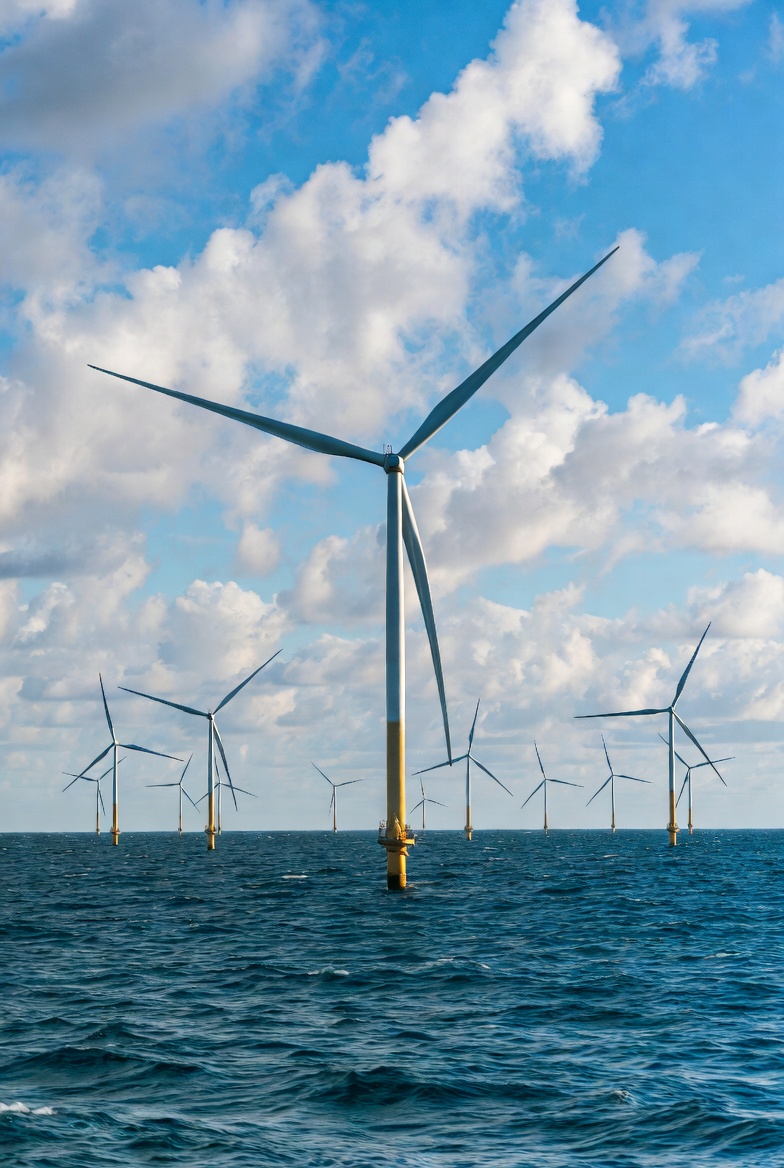 Who Can Afford Wind Power?
Medieval serfs were tied to the land, forced to provide a portion of their harvest to feudal lords, with no choice and no escape. Their children inherited the same bondage. Today, UK energy consumers find themselves in a remarkably similar position—tied to an electricity grid, forced to provide a portion of their wages to subsidize wind farm operators, with no choice and no escape. Welcome to Energy Serfdom.
The term may sound provocative, but the parallels are precise. UK consumers are coerced into funding a system that guarantees profits for energy companies while they bear all the risk. The Labour government—founded to free workers from exploitation—now enforces a neo-feudal energy regime where workers' wages are extracted to enrich others, and future generations inherit the debt. This is the reality behind the promise of cheaper, cleaner energy.
The Subsidy Tribute: £2.6 Billion and Rising
In 2025, UK households paid a record £2.6 billion in Contract for Difference (CfD) subsidies to renewable generators, with offshore wind taking over £2 billion of this total. Like the medieval tithe, this tribute is mandatory, extracted through electricity bills, with no option to refuse.
Individual wind farms have received staggering sums. Hornsea 1 offshore wind farm alone has collected £2.25 billion in subsidies since its CfD contract began—more than the GDP of some small nations. In 2025, offshore wind generators received approximately 52% of their total revenue from subsidies rather than market sales. They are the new feudal lords, collecting tribute while consumers toil.
These CfD figures represent only one stream of extraction. Serfs also pay through the Renewables Obligation scheme, constraint payments when wind farms are paid to reduce output, grid upgrade costs, and carbon levies on gas generation. The total burden is staggering and growing.
Bondage Without Choice: The Serfdom Structure
Medieval serfdom had defining characteristics. Energy Serfdom mirrors them precisely:
Tied to the domain: Just as serfs could not leave the manor, consumers cannot escape the grid. Every household and business must participate. Geographic monopoly ensures captivity.
- Details
- Written by: J C Burke
- Hits: 16181
 Our article entitled "Net Zero they do not have a Clue" has garnered a big responce, we penned it on 22nd June 2023 with a big section devoted to the Parliamentary debate covered by Hansard.
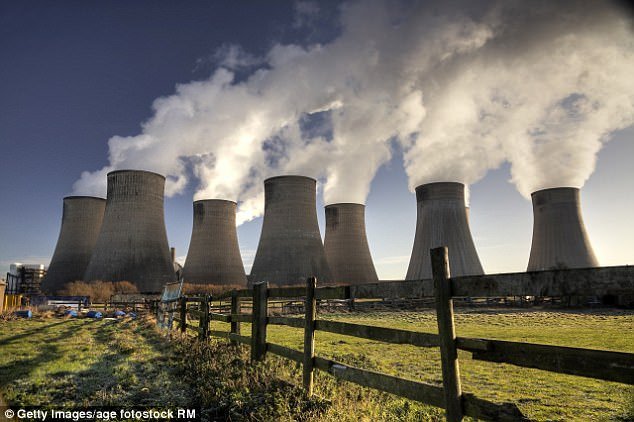
The image shown is part of the problem: 8 cooling Towers sending 65-70% of the Heat Energy in a Centralised Electricity Generating plant up into the sky! This cannot continue - Generation INEFFICIENCY is a major issue with the Centralised Power Network, both in the UK and other nations. It is too inefficient - so those EV vehicles getting their {electrical} charge from the 'mains' are just "importing" their waste.
But now Reuters reports, of news from Shell and BP, tends to indicate serious reservations - and thus COLD FEET!! Litterally!
See the Reuters Report in Full below: Web Linkage: https://1.reutersevents.com/LP=36061,
""Net zero and hydrocarbons – a case of and, not or""
""Media reports that Shell is taking an axe to jobs in its low-carbon solutions and hydrocarbon units -- Reuters reporting in October that around 15% of the Anglo-Dutch supermajor’s workforce would be cut -- have reinforced concerns that the industry’s commitment to net zero may be eroding in a high commodity price climate.
According to the reports, 200 jobs will go in 2024, with another 130 will be placed under review by the company.
The news represents a potential challenge for a company whose low-carbon division was intended to spearhead a transition to clean energy.
But it is not alone. BP – the first oil major to set a course to net zero back in 2020 – has also faced criticism from environmental activists over a scaling back of ambitious emission reduction targets. Climate-focused investors reacted negatively to BP’s February 2023 announcement that it would aim for a 20-30% cut to emission by 2030, compared to 35% previously.
- Details
- Written by: J C Burke
- Hits: 72482
 Spending watchdog MPs on the Public Accounts Committee are concerned about lack of transparency, [and] about the cost to consumers of the Government’s plan to expand nuclear, solar and wind power.
In addition, the focus on "Carbon Capture Measures" are particularly worrying, from both a cost and desirability aspect, as it blindly accepts the premise that CO2 is a "Causation" of; Global Warming {?} or now "Climate Change". No latitude is given any any dissenting viewpoints such as Dr. Patrick Moore Lee Yun-Jeong Dr Richard Lindzen, even David Ballamy - In 2008 Bellamy signed the Manhattan Declaration, calling for the immediate halt to any tax-funded attempts to counteract climate change. He maintained a view that man-made climate change is "poppycock", insisting that climate change is part of a natural cycle!
In addition Energy Efficiency improvements both in buildings and in the Centralised Electricity systems are not given sufficient prominence - a tragedy considering their "low hanging fruit" aspects and inexpensive improvements. Particularly in the UK's Housing Stock {24.2 million} and the problems with building so few new {and highly energy efficient} properties. New Build Completions; 204,530 {to March 2022} AND 210,320 {to March 2023} and 6 months to September 2023 of 93,480 Completions - and much fewer starts due to Covid Lockdown {insanity}} [Housing, Commercial Retail and Industrial].
The Government estimates that up to £400 billion of public and private investment in new generating capacity will be needed by 2037, but the PAC is unconvinced that the private sector has been given enough clarity to confidently invest.
In a critical report published below {on 15th June 2023}, the PAC calls on Government to pull together numerous decarbonisation plans into coherent strategy. This should be pulled together by autumn 2023 at the latest.
The Government’s delivery plan must also set out when and how the costs of decarbonising the power sector will be likely to have an impact on energy bill payers and taxpayers.
Dame Meg Hillier MP, Chair of the Committee, said: “What is the plan? It has now long been understood and accepted that greening our economy is an existential priority, with the Government setting itself the target of securing an entirely low-carbon power supply by 2035.
- “But without a coherent delivery plan to get there, the Government will find it harder to know what decisions it must take, and when, to ensure that it can realistically reach its ambitions.
- “There are just twelve years left for the Government to meet its low carbon energy target, and much still to do if this is to be achieved – and at a cost the taxpayers and bill payers can bear while ensuring the lights stay on.
- “There is an information vacuum in key areas – energy efficiency, investment, the cost of the transition to the public – that must be addressed.
- “We need an overarching plan charting the way, to provide much-needed confidence to the businesses and consumers who are needed to deliver it. When it comes to tackling the climate crisis, we can see around us, we are already living on borrowed time.”
Actual Discussion and oral Evidence: On following pages