
Forgotten Heat Battery
- Details
- Written by: John C Burke with Claude.ai
- Hits: 32
 The Forgotten Heat Battery
Why Britain's energy storage strategy should start with heat, not electricity
Heat is the energy problem we keep ignoring
Britain's energy storage debate is almost entirely about electricity: grid batteries, interconnectors and pumped hydro. Yet heat, not electricity, is where most of our energy goes.
The most detailed government breakdown found that heat accounted for 78% of all non-transport energy use, close to half of UK final energy. Transport took 42% of final energy in 2024, and most of what remains still goes on warming homes, offices and industrial processes.
If heat is the biggest demand, heat should be the biggest store. It also happens to be by far the cheapest form of energy to store. This article argues that the "heat battery" deserves to be at the centre of UK energy strategy, not on its fringes.
The tank we threw away
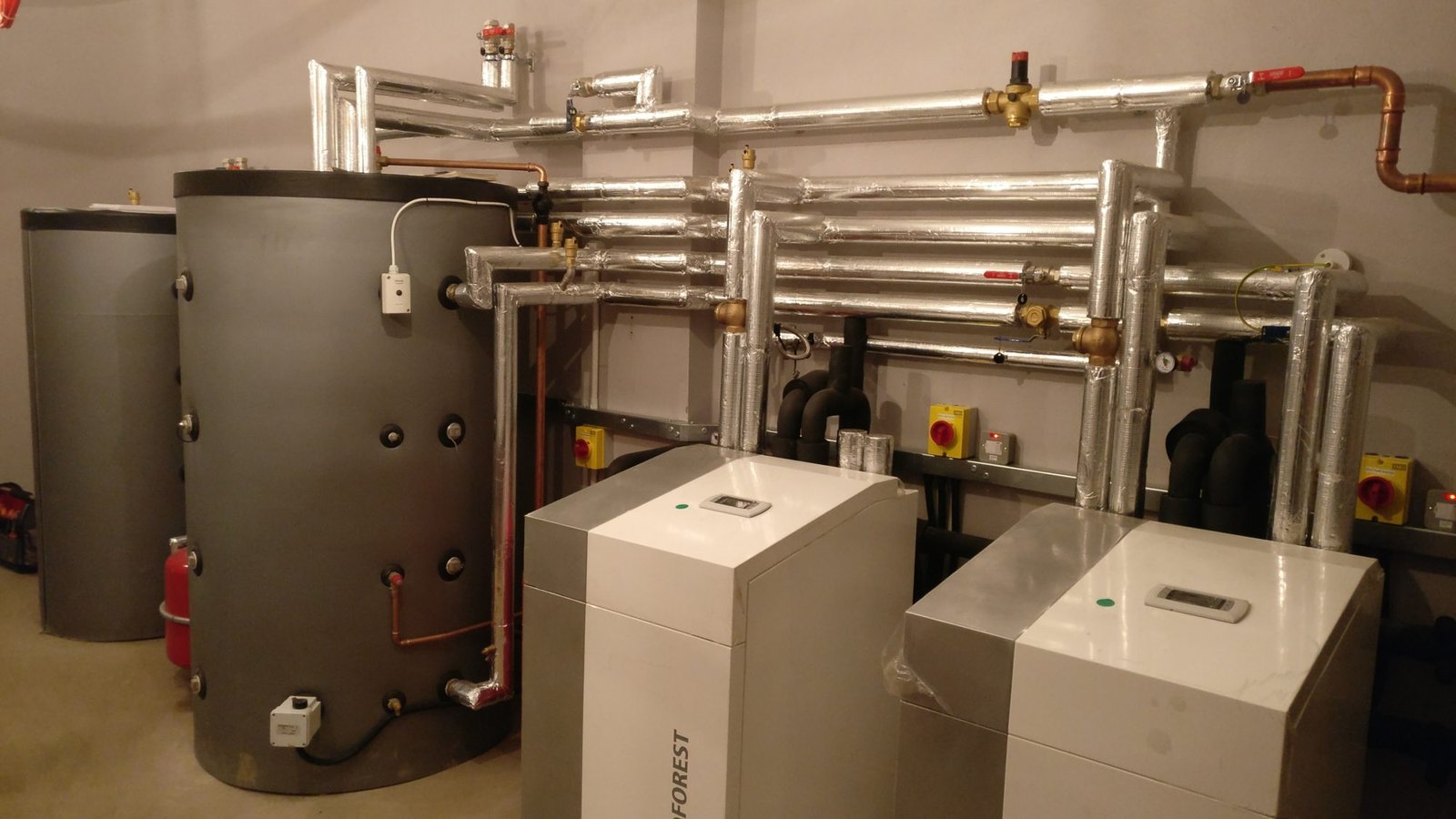
For most of the 20th century, a British home had a heat battery and nobody called it that. It was the insulated hot water cylinder in the airing cupboard, heated by the boiler or an Economy 7 immersion and drawn on through the day.
The switch to combination boilers quietly dismantled that stored capacity. Around 17 million UK homes now have a combi boiler and no hot water cylinder. Combis were sold on convenience and space, and they delivered both. But they turned hot water from a stored resource into an instantaneous demand.
That shift created an on-demand problem at national scale:
- Peaks instead of buffers. Every tap turned on fires a burner at full output. Millions of morning showers become a synchronised spike in gas demand, rather than a slow overnight top-up of a tank.
- No flexibility. A cylinder could be heated whenever energy was cheapest or most plentiful. A combi can only heat at the moment of use.
- A barrier to heat pumps. A heat pump heats water slowly and needs storage. Homes that ripped out the cylinder and repurposed the cupboard now face a space problem when they try to decarbonise.
DRAX - What Colour Elephant
- Details
- Written by: J C Burke
- Hits: 93
 DRAX - What Colour Elephant is this - White, Black or Wood Veneer?
Preamble
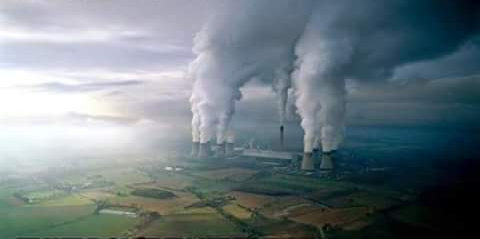
This appraisal follows on from DRAX and Dirty Secrets: A 50-Year Testament to Thermodynamic Waste, published on Sun Earth Energy on 12 February 2026. That article has had 664 reads to date.
The earlier piece is written from direct industrial experience. In 1975 the author was on placement with Norwest Holst in Leeds, planning the cooling towers for the new Drax station, which was built on the Selby coalfield to burn its coal. Around 1979–80, as tender planning engineer for Turriff Construction (Warwick), he delivered the bid for the Selby coalfield's above-ground works to NCB headquarters. He then drove back to Warwick through heavy snow, reaching the M1 just before it was closed. That article set out the long view: centralised power stations that dump most of their fuel energy as waste heat, the acid rain Yorkshire coal sent to Scandinavia, and the case for decentralised combined heat and power.
This document narrows the focus to the financial and carbon accounting of the coal-to-biomass conversion. It updates the figures with data published since February: 2025 subsidies of £999m, cumulative support of £8.72bn, the signed 2027–31 contract, and Drax's retreat from carbon capture (BECCS).
Updates to figures in the February article: the post-2027 support is a four-year contract to March 2031 at roughly half the previous subsidy, not an extension to 2035. Cumulative subsidies to the end of 2025 are £8.72bn, against the earlier figure of about £7bn.
Gas Security Is Energy Security
- Details
- Written by: Thanks to Kathryn Porter's independent analysis, including Gas Security: The Foundation of Energy Security (September 2026)
- Hits: 152
Gas Security Is Energy Security — and Bio-Methane CCHP Is the Missing Half
Sep 28, 2026 · @John C Burke
Britain's gas system is the foundation of its energy security, and policy has been treating it as a problem to retire rather than an asset to secure. That is the core finding of Gas Security: The Foundation of Energy Security, published in September 2026 by Kathryn Porter of the independent consultancy Watt-Logic. [Download her Full Report HERE]
For readers of Sun Earth Energy, the report is welcome confirmation of arguments we have made for over a decade. Porter supplies the market diagnosis. This article sets out the prescription her report leaves out: bio-methane in the gas grid, burned in high-efficiency combined cooling, heat and power (CCHP), inside an integrated urban energy system.
The two halves belong together. Her work shows why the gas network must be kept strong. Ours shows how to make it domestic, renewable and far more efficient.
The diagnosis: what Porter's report finds
Porter's central finding is that gas's role is more enduring, and the gas system more fragile, than current policy assumes. Her evidence falls into six points.
- Electricity is only part of the story. Even fully decarbonised, electricity meets only about a fifth of UK final energy demand. Space heating and industrial process heat remain on gas for decades.
- The heat-pump arithmetic does not work on current timescales. Around 23–24 million homes use gas boilers. The UK installed about 105,000 heat pumps in 2025, a record year. Even at the reduced target of 450,000 a year, replacing the boiler stock would take around 50 years.
- Networks, not gas, are now driving bills up. Wholesale and network costs have both roughly doubled since 2017. Constraint payments more than trebled to £1.9 billion in 2025–26, and the National Audit Office has criticised the Connect & Manage approach.
- The North Sea could fall off a cliff, not a slope. Offshore pipelines such as CATS, SAGE and FLAGS need a minimum throughput to stay viable. The 2018 Theddlethorpe closure stranded 22 Southern North Sea fields at once.
- Storage is thin. Britain holds around sixteen days of gas demand in storage, and the future of Rough still awaits a funding decision.
- Imports are not guaranteed under stress. Norwegian reservoirs are at twenty-year lows, the French nuclear fleet is ageing, and cold, still weather tends to hit Britain and its neighbours at the same time.
Her recommendations follow: fix the misunderstanding of how gas is priced, raise domestic production, cut reliance on electricity imports, model gas and electricity together, focus on cheap energy, and treat energy security as national security.
RCP8.5 as Implausibility Sinks In
- Details
- Written by: Daily Sceptic items, plus Claude (Anthropic) / Sun Earth Energy analysis
- Hits: 1944
 The fallout from the recent Intergovernmental Panel on Climate Change (IPCC) ruling that computer model high emissions pathway RCP8.5 is “implausible” is only just beginning. Most mainstream media fearmongering stories over the last 15 years need to be moved into the junk file, as do the increasingly shrill sandwich-board pronouncements of King Charles and Sir David Attenborough. But the rot goes much deeper than ill-informed public comment, although that alone has been enormously influential in promoting the Net Zero fantasy. Activist-ridden science bodies such as the UK Met Office have brazenly used RCP8.5 to flam up weather predictions which in turn has led to onerous requirements being placed on British industry and finance. Politicians have been convinced by patently ridiculous claims and Net Zero rules and regulations have cascaded through the economy and society.
All the politicised predictions need to be junked and all the resulting regulations reconsidered with a view to abolition. They are all based on assumptions that many at the time said were ridiculous and have now been officially marked as not wanted on voyage. Those inclined to be uncharitable might suggest it was all a hoax from start to finish.
Page 1 of 16